Ask five web agencies in Jakarta or Bandung to quote for a company website and the answers can run from Rp1.5 million to Rp80 million. Both ends can be honest. They are usually quoting different things. One sells a theme with your logo dropped in, the other sells copywriting, a custom design, and someone who still answers the phone two years later. This guide is meant to help you tell them apart. The ranges below are what we see in Indonesia in 2026 for work done by a proper agency or software house. Freelancers often charge less, and for some jobs that is fine.
Indicative Prices by Website Type
The type of website sets the rough bracket. Within each bracket, the factors in the next section decide if you land near the bottom or the top. All figures exclude yearly running costs, which we cover further down.
| Website type | Typical scope | Indicative cost | Duration |
|---|---|---|---|
| Landing page | One long page for a product or campaign, contact form or WhatsApp button, analytics and ad pixels | Rp3 million to Rp15 million | 1 to 3 weeks |
| Company profile | 5 to 15 pages, theme or light custom design, blog or news, contact form, basic SEO setup | Rp8 million to Rp40 million | 3 to 8 weeks |
| Online shop | Catalogue, cart, Midtrans or Xendit payments, shipping cost API, order and stock admin | Rp20 million to Rp100 million | 1 to 3 months |
| Custom web application or portal | Logins with several user roles, business workflows, reports, integration with internal systems | Rp75 million to Rp500 million or more | 3 to 9 months |
The online shop range is wide because a WooCommerce shop with a decent theme sits at the bottom, while a custom shop with member pricing, stock sync, and its own checkout sits at the top. Web applications and portals are really software projects, and we explain how those are priced in a separate article on custom software cost.
One honest note before you spend anything. If you sell a few dozen products and your buyers already shop on Shopee, Tokopedia, or TikTok Shop, you probably do not need your own online shop yet. A marketplace storefront plus a simple company profile that links to it costs far less, and the marketplace brings the traffic. Build your own shop when marketplace fees start eating your margin, or when you want to own the customer list and repeat orders.
What Actually Drives the Price
- Number of unique templates. A homepage, a service page, a blog post, and a contact page are four templates. Twenty service pages built on one template add content work, not design work, so count templates rather than pages.
- Content writing and photos. Many quotes assume you supply all text and images. Professional copywriting is usually priced per page or per article and varies a lot by writer, and a half-day photo shoot at your office or plant adds a few million rupiah. Late content from the client is the most common reason website projects slip by weeks.
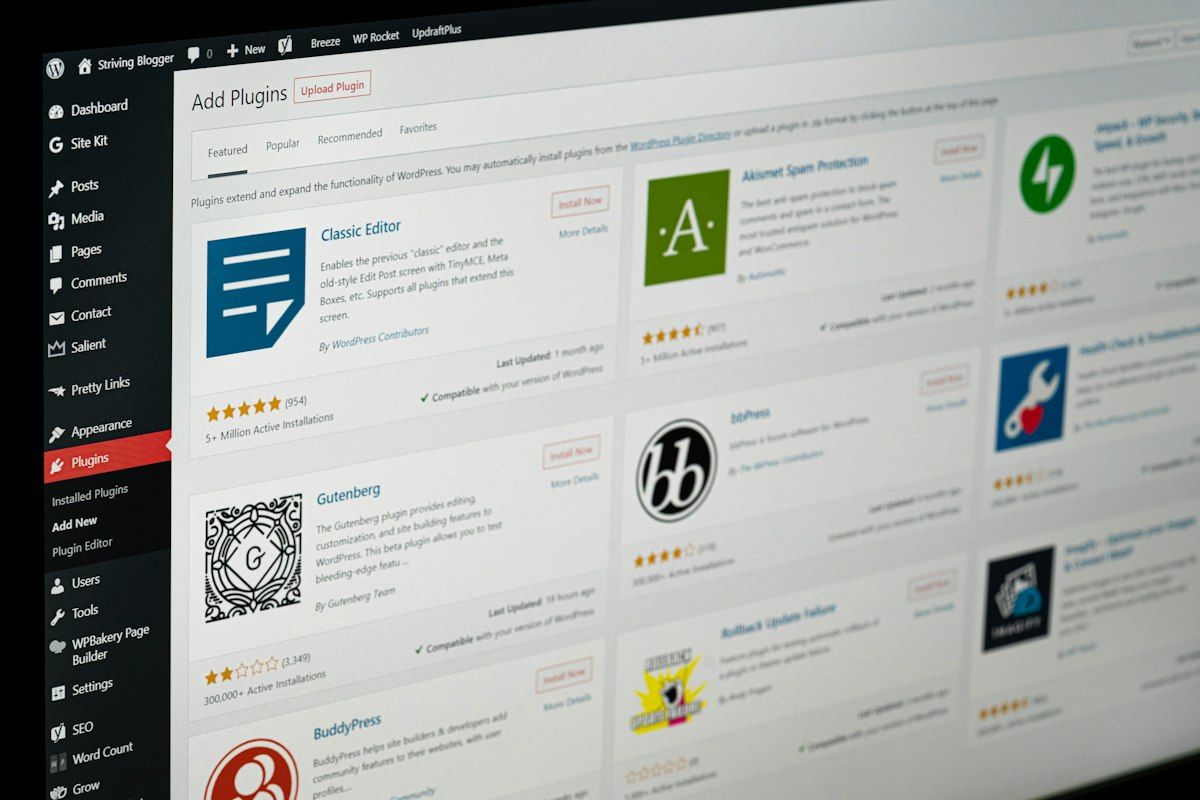
- The CMS. Being able to change the homepage banner, add a team member, or publish news yourself means those fields have to exist in the admin. WordPress gives you much of this out of the box. On a custom build, every editable section is development work.
- Integrations. A form that sends an email is trivial. Pushing leads into HubSpot, syncing products and stock with Accurate or Jurnal, taking payments through Midtrans, or sending order updates over the WhatsApp Business API each adds days, sometimes weeks.
- Multiple languages. Indonesian plus English doubles the content, needs separate URLs, a language switcher, and hreflang tags. Plan for roughly 20 to 40 percent more effort, plus the translation itself.
Theme or Custom Design
A premium WordPress theme from a marketplace such as ThemeForest costs around USD 60 once, usually with six months of author support. The agency adjusts colours, fonts, and layout, then pours in your content. It is quick and cheap. The downside is that your site looks like many others, and you inherit whatever the theme ships with: a heavy page builder, three slider plugins, and scripts on every page that slow it down on mobile.
Custom design means a designer draws each template in Figma for desktop and mobile, you review and revise, and developers build exactly that. It typically adds Rp10 million to Rp40 million and two to four weeks. The result is lighter and fits your brand. Our honest view is that for most company profiles, a lightweight theme with real photos and clear writing beats a custom design filled with stock images and vague copy. Pay for custom design when the website is your main sales channel, or when how the brand looks is part of what you sell.
Running Costs Every Year
The build is a one-off. These keep coming, and a quote that says "free domain and hosting" usually means free for the first year only. Prices vary by provider, so treat these as ballpark figures.
- Domain .com: around Rp150 thousand to Rp250 thousand a year. Check the renewal price, which is often higher than the first-year promo.
- Domain .co.id: around Rp250 thousand to Rp400 thousand a year. PANDI only issues it to registered Indonesian businesses, so the registrar will ask for the ID card of the person in charge and a legal document such as the deed of establishment or the NIB. Prepare these before the launch week.
- Hosting: around Rp500 thousand to Rp2 million a year for decent hosting of a company profile at Indonesian providers such as IDCloudHost or Rumahweb. An online shop with real traffic is better on a VPS, from around Rp150 thousand a month.
- SSL: free through Let's Encrypt on almost every host. If someone bills you yearly for a basic certificate on a company profile, ask why.
- Email: mailboxes included with hosting work, but they land in spam more often. Google Workspace or Microsoft 365 costs roughly USD 6 to 8 per user per month on the basic plans.
- Licences and maintenance: premium plugins such as Elementor Pro or WP Rocket renew yearly at roughly USD 50 to 100 each, and a maintenance package covering updates, backups, uptime monitoring, and small edits commonly runs Rp500 thousand to Rp2 million a month.
Why the Rp500 Thousand Website Ends Up Costing More
Packages at Rp500 thousand to Rp1 million, domain and hosting included, are everywhere on Instagram and marketplaces. Some are run by honest people. But at that price something has to give, and we see the same problems when these sites reach us. The domain is registered in the vendor's account, sometimes in the vendor's name. The hosting is a reseller account you cannot log into. You get an editor login at best, never the full admin or the files.
The theme is often a nulled copy, a pirated premium theme downloaded for free, which cannot be updated and sometimes carries a backdoor. Backups do not exist. When the vendor stops replying or you stop renewing, the site goes offline. If the domain is lost, so is every link and search ranking it built up, and you pay for the website a second time, now with a new domain.
The cheapest website is the one you only have to build once.
How to Compare Quotes
- 1Put the quotes on the same scope: number of templates, who writes the content, how many design revision rounds, and which languages.
- 2Check what is bundled, such as domain, hosting, and email, for how many years, and what renewal costs after that.
- 3Ask in whose name the domain is registered, and who holds the hosting account, full CMS admin, and source code. Get the answer in writing.
- 4Ask which theme and plugins they use, whether they are licensed, and whose account the licences are in.
- 5Ask about the warranty after launch, the monthly maintenance price, and what you receive if you stop paying.
- 6Ask for two live sites they built more than a year ago, and open them on your own phone.
What to Prepare Before Asking for Quotes
Write down what the website is for in one or two sentences. Getting enquiries over WhatsApp, looking credible in a tender, recruiting staff, and selling online lead to different sites. Then list the pages you think you need and two or three websites you like, with a line on why. A sentence like "we like how this one shows projects with photos and location" helps an agency more than "modern and elegant".
Be honest about content. Do you have current photos, your logo as a vector file, and someone who can write or approve text? Decide who will update the site after launch and how often, because that answer shapes the CMS. List any systems the site must talk to. And share a budget range. It feels like giving away your position, but it lets a vendor propose what fits instead of guessing.
When we quote a website at Salamun Teknologi, we break it down by template, content, and integration, register the domain and hosting in the client's name, and hand over full admin access at launch. If you already have a quote and want a second opinion on whether it is fair, we are glad to read through it.
Key takeaways
- Indicative ranges in 2026: Rp3 to 15 million for a landing page, Rp8 to 40 million for a company profile, Rp20 to 100 million for an online shop, and Rp75 million upward for a web application.
- Templates, content, the CMS, integrations, and extra languages move the price more than the number of pages.
- Budget for yearly costs: domain, hosting, email, plugin licences, and maintenance. SSL is usually free.
- Very cheap packages often keep the domain, hosting, and admin access with the vendor, which makes you pay twice later.
- Compare quotes on the same scope and get ownership of the domain, accounts, and code in writing.